Key Takeaways
- Providers who open a medical practice in Englewood, NJ land in a dense, well-insured market with a major teaching hospital, a walkable downtown, and direct access to New York across the George Washington Bridge.
- Englewood packs roughly 30,000 residents into 4.9 square miles, with a median household income above $100,000 and a poverty rate below the national average.
- The January 2026 merger of Englewood Health into RWJBarnabas Health reshaped the local referral landscape, which independent practices can use to their advantage.
What Makes Englewood, NJ a Strong Place to Open a Medical Practice
Providers evaluating where to open a medical practice in Englewood, NJ tend to arrive by one of two routes: they already live in Bergen County and want to stop commuting, or they practice in New York and have run the numbers on Manhattan rent. Both groups find the same set of conditions once they look closely.
Englewood is small, dense, and economically stable. The city covers 4.9 square miles and holds roughly 29,600 to 30,200 residents depending on the estimate year, producing a population density above 6,000 people per square mile. Density matters for a practice because it shortens the distance between you and your patient panel — a five-minute radius in Englewood reaches more households than a fifteen-minute radius in most of New Jersey.
Layer a major teaching hospital, a functioning downtown business district, and bridge access onto that density, and the case builds quickly.
The Numbers That Matter to a Practice
According to Census Reporter’s profile of Englewood, drawing on American Community Survey data:
| Measure | Englewood |
| Population | ~29,600 |
| Land area | 4.9 square miles |
| Population density | ~6,017 per square mile |
| Median household income | $102,571 |
| Median age | 41.5 |
| Per capita income | $59,017 |
| Poverty rate | 9.21% (national: 12.5%) |
Median household income above $100,000 supports both insurance-based and cash-pay models. A poverty rate meaningfully below the national figure suggests stable insurance coverage across the patient base. Median age in the low forties puts a large share of the population in the years when healthcare utilization begins climbing.
Density Without Isolation
Englewood’s compactness comes with reach. The surrounding towns — Englewood Cliffs, Tenafly, Leonia, Teaneck, Bergenfield, Cresskill, Closter — sit within a short drive, and several carry higher household incomes than Englewood itself. A practice located downtown draws from a catchment considerably larger than the city limits.
Our post on what professionals can rent a medical suite covers the range of practitioners already operating in this market.
The Hospital Anchor and What Changed in 2026
Few towns of 30,000 have a hospital of Englewood’s standing, and its presence shapes the local healthcare economy in ways that benefit independent practices.
Englewood Hospital
Englewood Hospital at 350 Engle Street has operated since 1890 and functions as a community teaching hospital. It has held a Leapfrog Hospital Safety Grade of A, most recently in spring 2025, has been named a Leapfrog Top Teaching Hospital seven times including 2024, and earned a fifth consecutive Magnet designation for nursing excellence in 2021.
For an independent practice, a hospital of that caliber nearby produces several concrete advantages:
- Referral flow in both directions — specialists refer out for primary and ancillary care, and you refer in for procedures
- Diagnostic and imaging access within a short drive for your patients
- A concentration of providers who already know the area and each other
- Patient expectations shaped by proximity to recognized quality
- Recruiting and coverage relationships when you need cross-coverage
The RWJBarnabas Merger
Englewood Health merged with RWJBarnabas Health in January 2026, joining a substantially larger system. Consolidation of that scale reliably produces a few effects worth understanding.
Referral pathways get reorganized. Employed physicians within a large system typically refer inside it, which can close some doors and open others. Independent practices often gain from the patients and providers who prefer to stay outside a consolidated network.
Employed clinicians reassess. System mergers historically prompt a wave of departures among providers who joined a community hospital and find themselves inside a regional system. Some of those clinicians open independent practices, which is part of why demand for small suites in this corridor has moved.
Patients notice too. A share of any patient population actively prefers an independent practitioner, and that preference sharpens after a merger.
Location and Access
Geography does more work for an Englewood practice than most providers initially credit.
Bridge Proximity
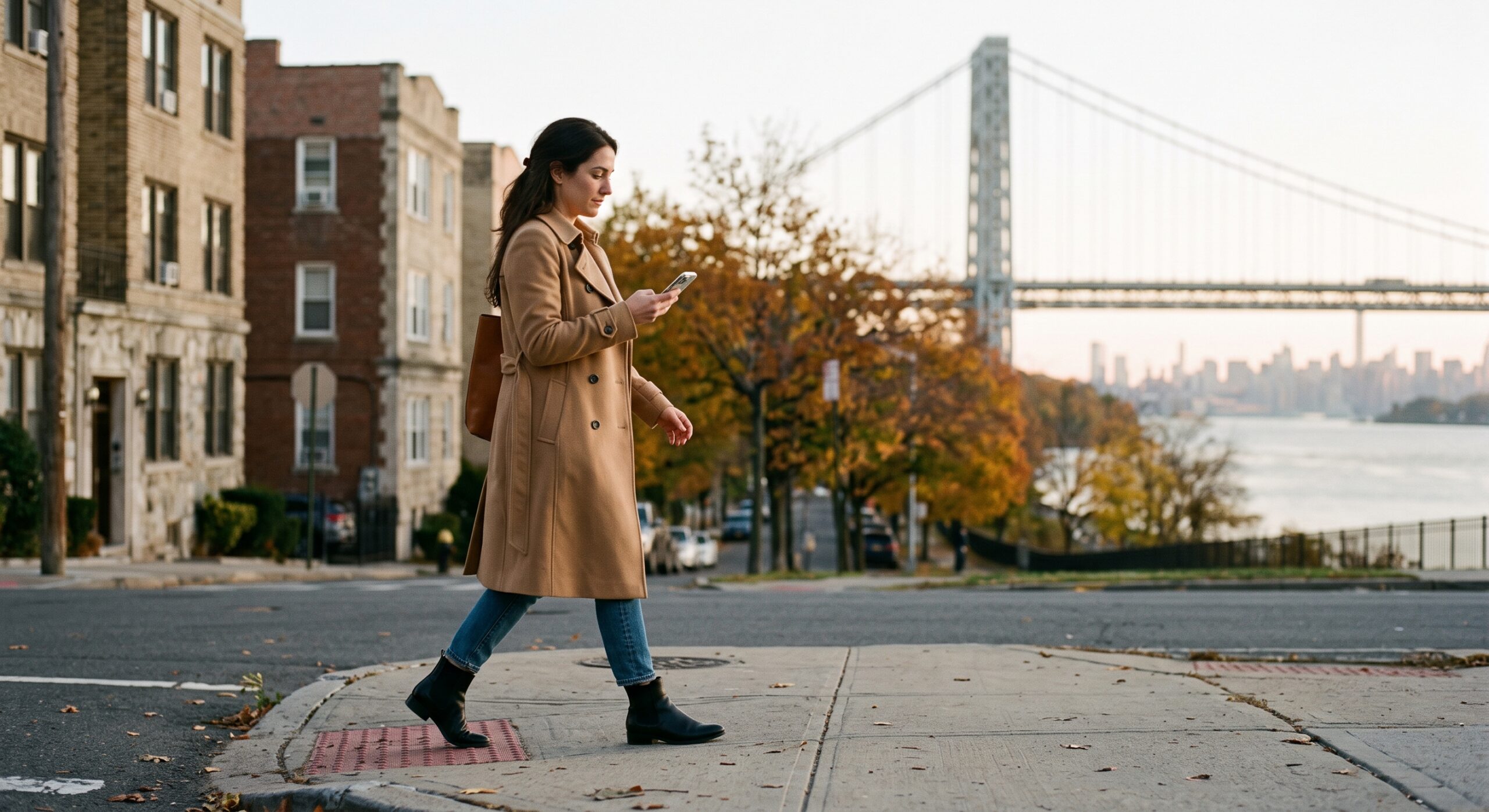
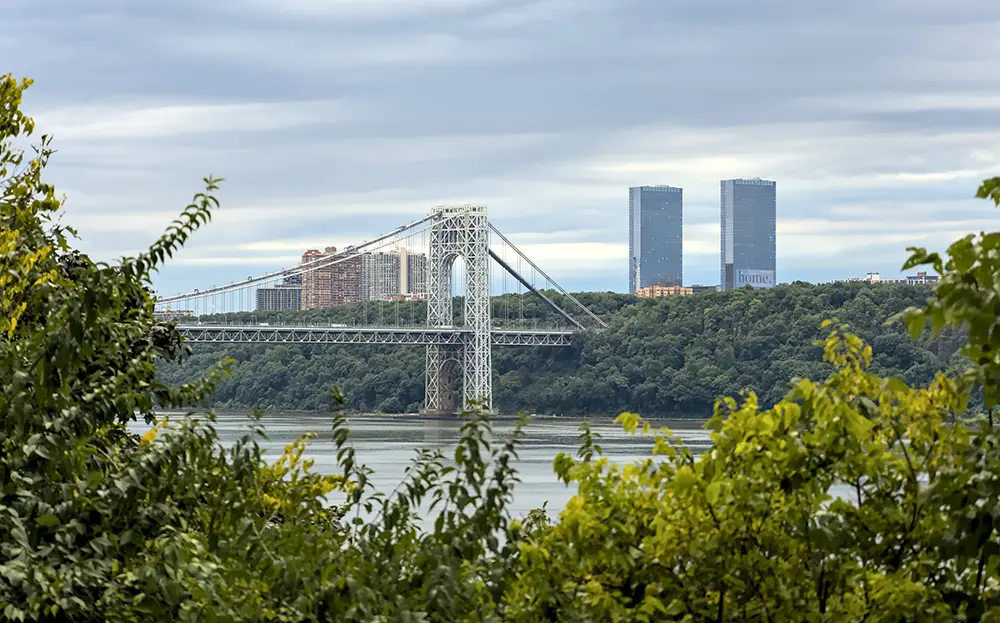
Englewood sits a short drive from the New Jersey approach to the George Washington Bridge, putting upper Manhattan, Washington Heights, Inwood, and the west Bronx within reach outside peak hours. Providers relocating from New York frequently retain a meaningful share of their patient base for exactly this reason.
Patients evaluate an appointment on total friction rather than mileage. A Washington Heights patient spending forty minutes on transit and walking may find a drive to Englewood with straightforward parking to be the easier trip. Our guide to medical office space near the George Washington Bridge covers that transition in depth.
Road Network
Route 4, Route 80, the Palisades Interstate Parkway, and Interstate 95 all sit within minutes, which means patients from across Bergen County reach Englewood without difficulty. Commuting patterns already run through the area, so an Englewood appointment often fits a trip a patient was making anyway.
Average commute time for Englewood residents runs just under 31 minutes, indicating a working population accustomed to driving — a group that schedules appointments around work and values evening availability.
Downtown Rather Than Office Park
Palisade Avenue and the surrounding blocks function as a genuine downtown, with retail, restaurants, and foot traffic. A practice on a working commercial street benefits in ways a suburban office park cannot replicate:
- Passive visibility to people already in the area
- Patients combining an appointment with other errands
- Municipal parking rather than a single dedicated lot
- Walk-in inquiries and neighborhood recognition
- An address patients can find without navigation trouble
Suites at SADA Med Suites sit in that downtown corridor, and our location page covers the specifics.
Who the Patient Base Actually Is
Practices succeed or fail on whether their services match the population. Englewood’s profile suits a wide range.
Demographic Composition
Roughly 36% of Englewood residents were born outside the United States, and the city’s racial and ethnic composition is genuinely mixed — no single group forms a majority. Hispanic, White, Black, and Asian populations all hold substantial shares.
Practical consequences for a practice:
- Multilingual capability is a competitive advantage, particularly Spanish, and front-desk language support has measurable value
- Culturally informed care matters to patient retention in a way it doesn’t in homogeneous markets
- Service mix should reflect the population rather than a generic suburban assumption
Income Distribution
Median household income above $100,000 with a poverty rate under 10% describes a market that supports several business models simultaneously. Insurance-based practices find well-covered patients. Cash-pay practices — behavioral health, aesthetics, functional medicine, concierge — find households with discretionary capacity.
Worth noting that Englewood contains real income range within its borders. Neighborhoods vary, and a practice serving one end of the distribution should be deliberate about location, hours, and payment options.
Age Profile
A median age in the low forties means a population entering the years when chronic condition management, preventive screening, and specialty referral all increase. Add the surrounding towns, several of which skew older, and the utilization picture strengthens further.
Which Practice Types Fit This Market
Not every specialty benefits equally from these conditions.
Strong fit:
- Behavioral health and psychiatry, where regional demand substantially exceeds supply
- Primary care, particularly practices offering evening and weekend hours
- Aesthetic practices, supported by income levels and downtown foot traffic
- Chiropractic, acupuncture, and wellness services
- Physical therapy, given the hospital’s orthopedic and spine volume
- Specialty consultation practices operating alongside hospital privileges
Requires more thought:
- Practices duplicating services the hospital system already provides at scale
- Highly specialized care requiring a catchment larger than Bergen County
- Equipment-intensive specialties that need buildout a small suite cannot support
The differentiator in a market this dense is rarely convenience alone, since patients have alternatives within walking distance. Language capability, appointment availability outside standard hours, and depth in an underserved specialty do more work.
Practical Considerations Before You Commit
Enthusiasm about a market should survive contact with logistics.
Parking
Downtown Englewood offers municipal lots and metered street parking, which is a meaningful improvement over denser bridge-adjacent towns but still requires evaluation. Walk the block at the hours your patients would arrive, on two different days, and check the path from parking to the entrance.
For practices serving older patients, parking is a retention issue rather than a convenience one.
Space and Licensing
Confirm two things before signing anything:
- The certificate of occupancy permits medical office use specifically, since professional office use is a separate classification in many municipalities
- Any facility requirement your profession carries is satisfied by the space
Physicians and podiatrists licensed through the State Board of Medical Examiners face no square footage requirement, and neither do mental health clinicians. Several other professions in New Jersey do carry premises-level obligations independent of personal licensure. Verify with your board rather than assuming.
Competition
Density cuts both ways. A market this concentrated already has providers in most categories. Before committing, search your specialty within a three-mile radius and count what comes back. A crowded category is not disqualifying, but it changes what your positioning needs to accomplish.
Building Visibility in a Local Market
Practices in dense markets grow through proximity relationships more than advertising.
First Moves
- Create a Google Business Profile the week you sign your lease, since local rankings take months to mature and the clock starts at creation
- Introduce yourself to primary care practices within a few miles, in person
- Connect with providers in your building, who generate internal referrals a standalone office never sees
- Join Bergen County and state professional associations
- Build a website with your services, location, parking guidance, and a booking path
- List in specialty directories patients actually use
What Compounds
Referral relationships compound; advertising does not. A primary care physician who sends you three patients in year one sends thirty across five years if the experience is good. Time spent on those relationships early returns more than the same time spent anywhere else.
Our provider directory shows the kind of provider mix that produces cross-referral within a single building.
Frequently Asked Questions
Is Englewood, NJ a good location for a medical practice?
The conditions are favorable: roughly 30,000 residents within 4.9 square miles, median household income above $100,000, a poverty rate below the national average, a major teaching hospital, a walkable downtown, and direct access to New York. Density and income stability support both insurance-based and cash-pay models.
What is the population of Englewood, NJ?
Approximately 29,600 to 30,200 depending on the estimate year, across 4.9 square miles. Population density runs above 6,000 people per square mile, which is high for a Bergen County municipality.
How close is Englewood to New York City?
A short drive from the New Jersey approach to the George Washington Bridge, placing upper Manhattan and the west Bronx within reach outside peak traffic hours. Providers relocating from New York frequently retain a portion of their patient base.
What hospital serves Englewood, NJ?
Englewood Hospital at 350 Engle Street, a community teaching hospital operating since 1890. It has held a Leapfrog Hospital Safety Grade of A and multiple Leapfrog Top Teaching Hospital designations, and merged into RWJBarnabas Health in January 2026.
How did the RWJBarnabas merger affect independent practices?
System consolidation typically reorganizes referral pathways toward employed providers inside the network, while also prompting some clinicians to leave for independent practice. Both effects have historically created opportunity for practices operating outside a consolidated system.
What specialties are in demand in Englewood?
Behavioral health and psychiatry stand out, since regional demand for prescribers and therapists substantially exceeds supply. Primary care with extended hours, aesthetic services, and wellness practices also fit the demographic and income profile well.
Does Englewood require a special license to operate a medical office?
Your professional licensure comes from your state board. Separately, confirm the building’s certificate of occupancy permits medical office use and that any facility requirement your profession carries is satisfied by the space. Municipal business registration may also apply.
Is parking difficult in downtown Englewood?
Municipal lots and metered street parking are available, which compares favorably to denser bridge-adjacent towns. Evaluate it yourself at the hours your patients would arrive rather than during a midday tour.
About SADA Med Suites
SADA Med Suites sits in the downtown Englewood business district, minutes from Englewood Hospital and the George Washington Bridge approach, with municipal parking nearby. Private furnished suites run 180 to 240 square feet as singles and 325 to 470 as doubles, with utilities, internet, cleaning, waiting area, and secure 24/7 access included.
A building of independent practitioners generates cross-referral a standalone office never sees. Our provider directory shows who’s already here, and our location page covers the neighborhood in detail.
Come see the location. View suites or book a tour. Call (551) 230-7668 — 50 E Palisade Ave, Fl 2, Englewood, NJ 07631.