
Key Takeaways
- Medical office space for rent in Edgewater and Cliffside Park, NJ sits in two of the densest square miles in the state, with Cliffside Park at roughly 26,900 residents per square mile.
- Edgewater carries median household income near $121,000 and has nearly doubled in population since 2000. Cliffside Park runs around $93,500 with a large Hispanic and Asian population.
- Clinical inventory is the problem. Commercial space along this corridor is retail or built into residential towers, and River Road traffic costs patients time they will not keep spending.
Medical Office Space for Rent in Edgewater and Cliffside Park, NJ: The Waterfront Corridor
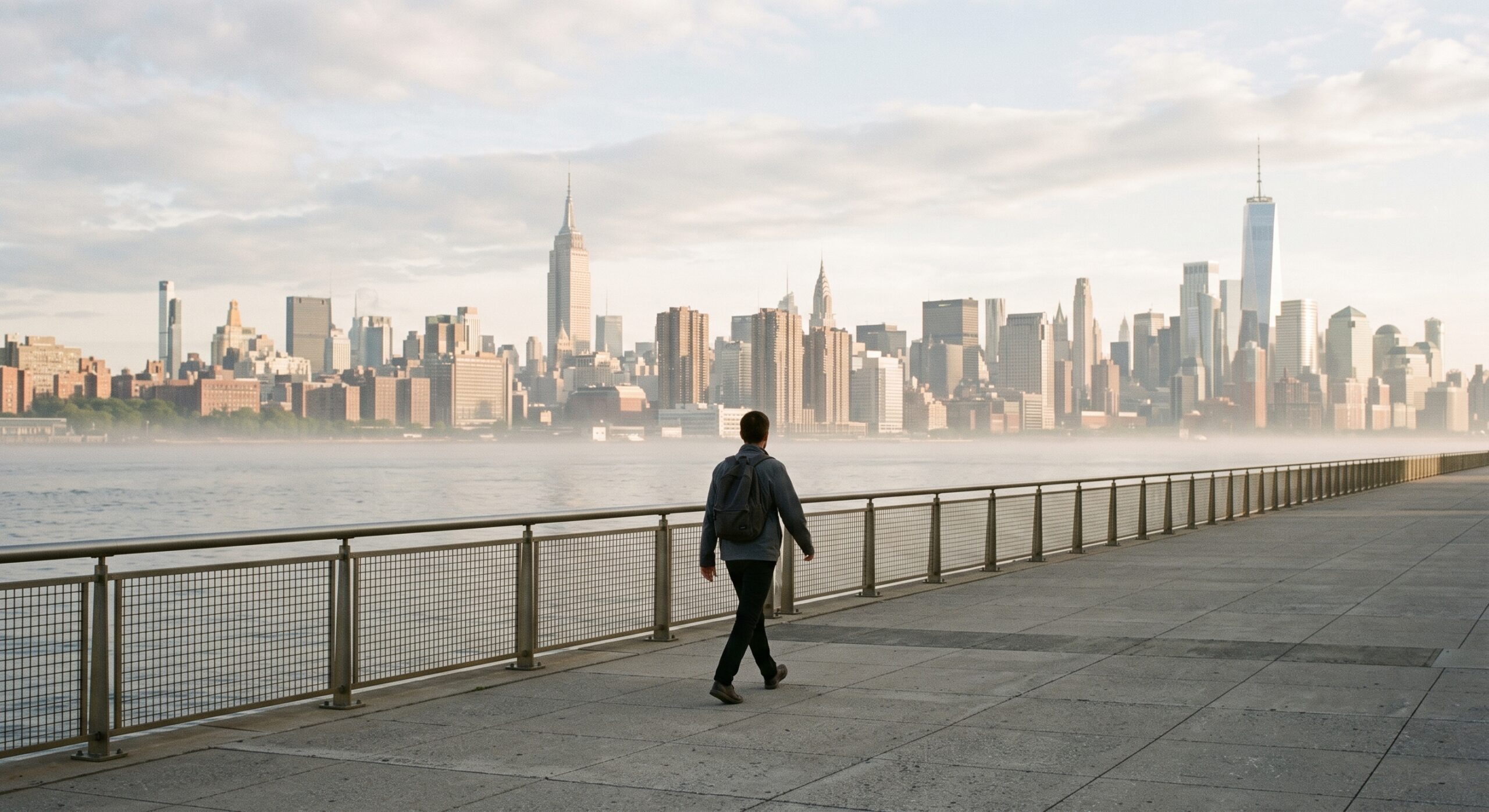
Providers looking at medical office space for rent in Edgewater and Cliffside Park, NJ are looking at a stretch of Bergen County that works nothing like the rest of it. No hospital anchors either town. No traditional medical corridor exists. What exists instead is extraordinary residential density, high household income, direct ferry access to Manhattan, and a commercial base built for retail rather than for clinical practice.
Edgewater occupies 0.85 square miles along the Hudson, with roughly 15,100 residents as of 2024 and a median age of 40.6, according to census-sourced data for the borough. Population density runs near 17,800 per square mile. The borough counted 7,677 people in 2000 and has nearly doubled since, driven almost entirely by waterfront high-rise development.
Cliffside Park sits immediately west on the bluff above it. Per Census Bureau QuickFacts, the borough held 25,693 residents at the 2020 census across 0.96 square miles — a density of roughly 26,875 per square mile, placing it among the densest municipalities in New Jersey. Median household income runs $93,452, with per capita income at $49,073.
Two towns, under two square miles combined, holding more than 40,000 people within a mile of each other.
Why Providers Look Here
- Density puts a large patient base inside a very short radius
- Income in Edgewater supports cash-pay and elective services comfortably
- Manhattan access by ferry and bridge, which matters to providers relocating from New York
- A residential base with little local healthcare supply, since neither town has a hospital
- Language demographics in Cliffside Park, where Hispanic residents make up roughly 34.5% and Asian residents 14.4% of the population
The underserved-supply point is the real draw. Dense residential towns without hospitals tend to export their healthcare demand, and a practice positioned inside one captures trips residents are currently making elsewhere.
What Separates the Two Towns
| Edgewater | Cliffside Park | |
| Population | ~15,100 | ~25,700 |
| Land area | 0.85 sq mi | 0.96 sq mi |
| Density | ~17,800/sq mi | ~26,900/sq mi |
| Median household income | ~$121,400 | $93,452 |
| Median age | 40.6 | 41.5 |
| Character | Waterfront high-rise, retail corridor | Dense residential, older housing stock |
| Commercial spine | River Road | Anderson Avenue |
Edgewater skews toward newer construction and higher incomes. Cliffside Park holds more people in less space with an older building stock and a more mixed income profile. Our town-by-town guide to Bergen County covers how both compare against the rest of the county.
The Inventory Problem
Density is the reason to be here. Inventory is the reason most providers end up somewhere else.
What the Commercial Base Looks Like
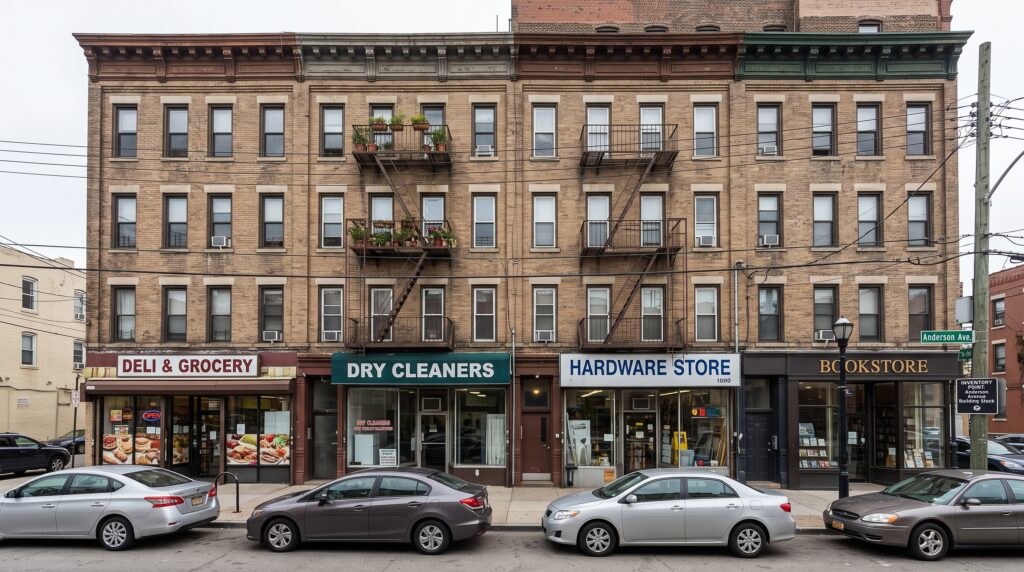
Edgewater’s commercial space concentrates along River Road, and the corridor was built for retail — shopping centers, big-box anchors, restaurants, and waterfront development. Professional office space exists, mostly inside mixed-use residential buildings rather than in purpose-built medical buildings.
Cliffside Park runs its commercial life along Anderson Avenue, a narrow corridor of ground-floor storefronts beneath apartments. Older stock, smaller footprints, and almost nothing configured for clinical use.
Neither town produces much in the 180 to 470 square foot range that suits a solo or two-provider practice. What surfaces tends to be ground-floor retail requiring conversion, or professional space inside a residential building with its own complications.
Residential Buildings Bring Their Own Questions
Professional space inside a condo or co-op building needs verification that a standalone medical building never does:
- Certificate of occupancy permitting medical office use specifically, since professional office use is a separate classification in many municipalities
- Condo or co-op board rules, which frequently restrict commercial use in ways a lease does not disclose
- Patient entry — do patients use the residential lobby, and is a doorman involved?
- Elevator access shared with residents, and how it performs at peak hours
- Building hours, and whether evening appointments are possible
- Signage rights, which are often limited to a directory line or nothing at all
- Deliveries, including where supplies arrive and who accepts them
Signage matters more than providers expect. Google’s guidelines for representing your business require businesses displaying an address to operate from it and maintain permanent fixed signage with the business name. A suite with no exterior identification complicates a Google Business Profile, which for a practice in a dense residential market is a meaningful source of new patients.
Infrastructure in Older Stock
Anderson Avenue buildings and older River Road properties were not built for clinical tenants. Check before committing:
- Electrical capacity for anything beyond a computer, and whether a dedicated line can be added
- In-suite plumbing, or whether adding a sink is permitted
- Per-suite climate control versus a building-wide system
- Sound transmission between units
- Regulated waste arrangements, or whether you contract independently
Our checklist of ten things to verify before renting a medical office suite covers the full evaluation sequence.
Parking and River Road
The constraint that decides whether patients keep appointments.
Traffic Is the Local Fact
River Road carries the entire waterfront corridor through a narrow strip between the Palisades and the Hudson, with retail traffic, residential traffic, and commuter traffic sharing the same lanes. Peak hours are genuinely difficult, and the delay is unpredictable rather than consistent.
A patient who allows twenty minutes and spends forty arrives late or cancels. Repeat it twice and they stop booking.
Parking Varies by Building
Waterfront developments generally have structured parking, though visitor access is often restricted in favor of residents and retail customers. Cliffside Park’s Anderson Avenue runs on street parking with residential permit restrictions on side streets.
Walk it before signing:
- Where does a patient park at 10am on a weekday, not at the hour of your tour?
- Is parking dedicated to the building, shared with retail, or street only?
- Do nearby residential streets carry permit restrictions?
- How far is the walk, and is any of it exposed?
- Where does a patient with mobility limitations park?
Do it twice, on different days. A landlord’s description of parking is worth nothing against your own observation.
Scheduling Around the Corridor
If you commit to this market, build the schedule around the traffic. Mid-morning and early-afternoon appointments outperform rush-hour slots substantially, and telling patients so improves attendance. Our guide to medical office space near the George Washington Bridge covers the same discipline for providers whose patients cross the river.
Who This Market Suits
Not every practice fits a corridor with no hospital and limited clinical inventory.
Strong Fit
- Aesthetic practices, supported by Edgewater’s income profile and a younger high-rise population
- Wellness, nutrition, and functional medicine, where patients pay directly
- Behavioral health, particularly multilingual clinicians serving Cliffside Park’s Hispanic and Asian populations
- Primary care with extended hours, serving a commuting population
- Satellite locations for practices based elsewhere in the region
Harder Fit
- Specialists depending on hospital privileges, since the nearest hospitals sit outside both towns
- Equipment-intensive practices, given the conversion cost in retail or residential space
- Practices needing three or more rooms, which the available inventory rarely supports
- Insurance-heavy models in Cliffside Park, where income sits closer to the county middle
Our post on which professionals can rent a medical suite covers what different boards require of the premises, and physicians and podiatrists licensed through the State Board of Medical Examiners face no square footage minimum while several other professions do.
The Satellite Option
Several practices serve this corridor without leasing in it. A provider based elsewhere in Bergen County can run one or two days a week here, or draw waterfront patients to a location with easier parking a short drive away.
Our guide to opening a satellite office in Bergen County covers the patient math behind that decision — map your patient ZIP codes before assuming a second address is needed.
Where Else to Look
A search limited to two boroughs totaling under two square miles rules out a great deal.
Englewood, Fifteen Minutes North
| Edgewater / Cliffside Park | Downtown Englewood | |
| Small suite inventory | Scarce | Available |
| Building type | Retail corridor, residential towers | Downtown professional |
| Parking | Building-dependent, permit restrictions | Municipal lots, street |
| Hospital proximity | None in town | Englewood Hospital nearby |
| Manhattan access | Ferry and bridge | Short drive to bridge |
| Signage | Often limited | Door and directory |
Englewood carries its own hospital, a walkable downtown business district, and municipal parking. For patients who already drive — which describes most of this corridor outside the ferry commuters — fifteen minutes north reads as negligible against a parking search that doesn’t end.
Our post on medical office space for rent in Englewood covers what’s available there, and our location page covers the neighborhood.
Other Nearby Options
Fort Lee sits a mile north with bridge proximity and its own parking constraints, covered in our Fort Lee guide. Leonia and Palisades Park offer smaller professional buildings inland. Fairview and Ridgefield sit south toward Hudson County at lower cost.
Each trades one variable for another. Decide which one your practice depends on before ruling any of them out.
Serving the Corridor Without an Office There
Two structures reach these patients without a lease on this stretch of road.
A Business Address Plus Clinical Space Elsewhere
Telehealth and hybrid practices need a professional business address for entity registration, NPI records, and marketing — not a treatment room on River Road. A virtual membership provides that address, with clinical space added later if in-person days become part of the practice.
Worth being precise about limits: a virtual address does not support a Google Business Profile, DEA registration, or seeing patients. Our post on multi-state telehealth practice covers where the line falls for remote practices.
Right-Sizing Before You Commit
Providers consistently overestimate how much space they need, which is how they end up accepting a difficult location because it was the only thing available in the size they thought they wanted.
Run the math first. Our post on how many treatment rooms you need works backward from revenue, visit value, and weekly capacity, and most solo practices land on one room — which widens the range of locations that work.
Frequently Asked Questions
Is Edgewater a good location for a medical practice?
The patient base is strong: roughly 15,100 residents in under a square mile, median household income near $121,000, and almost no local healthcare supply. The constraints are commercial inventory built for retail, professional space mostly inside residential buildings, and River Road traffic.
How dense is Cliffside Park?
Roughly 26,875 residents per square mile as of the 2020 census, across 0.96 square miles — among the densest municipalities in New Jersey. Median household income runs $93,452.
Is there a hospital in Edgewater or Cliffside Park?
No. Neither borough has one. The nearest facilities sit outside both towns, which matters for specialists depending on privileges or high-acuity referral volume.
Can I open a medical office inside a residential building there?
Sometimes, with verification. Confirm the certificate of occupancy permits medical office use specifically, and check condo or co-op board restrictions separately from the lease. Professional office use and medical office use are distinct classifications in many municipalities.
What languages should a practice support in this corridor?
Spanish is the most significant in Cliffside Park, where Hispanic residents make up roughly 34.5% of the population, with Asian residents at about 14.4%. Multilingual front-desk support has measurable value in a market this dense.
How bad is parking along River Road?
Variable and worth checking yourself. Waterfront developments have structured parking with restricted visitor access; Cliffside Park runs on street parking with permit restrictions on residential side streets. Observe it at your patients’ arrival hours on two different days.
How far is Englewood from Edgewater?
Roughly fifteen minutes by car depending on route and traffic. For patients who drive, the difference registers as minimal — and municipal parking often makes the trip easier overall than a closer location with no place to leave a car.
What size suite does a solo provider need here?
Most consultation and talk-based practices work in 180 to 240 square feet. Procedural work and two-provider arrangements generally need 325 to 470. Sizing correctly first widens the range of locations that can work for you.
About SADA Med Suites
SADA Med Suites rents private, fully furnished medical office suites to independently licensed practitioners at 50 E Palisade Avenue in downtown Englewood, New Jersey, about fifteen minutes north of the waterfront corridor. Singles run 180 to 240 square feet and doubles run 325 to 470, with utilities, high-speed internet, cleaning, shared waiting area, in-suite sink, private climate control, video intercom entry, secure 24/7 access, and custom door signage included in one monthly payment.
Municipal parking sits nearby, and signage on your door and the building directory means a Google Business Profile works the way it should — two things the waterfront corridor rarely offers together.
Compare the corridors. Browse available suites or book a tour. Call (551) 230-7668 — 50 E Palisade Ave, Fl 2, Englewood, NJ 07631.