
Key Takeaways
- Medical office space near the George Washington Bridge puts a New Jersey practice within a short drive of upper Manhattan and the Bronx, which lets providers keep a meaningful share of their existing patient base.
- New Jersey licensure is a separate application from New York. Start it before you start looking at space, because it’s the longest item on the timeline.
- Patient retention across the bridge depends on parking and appointment timing more than distance. Both are solvable.
Why Providers Look for Medical Office Space Near the George Washington Bridge
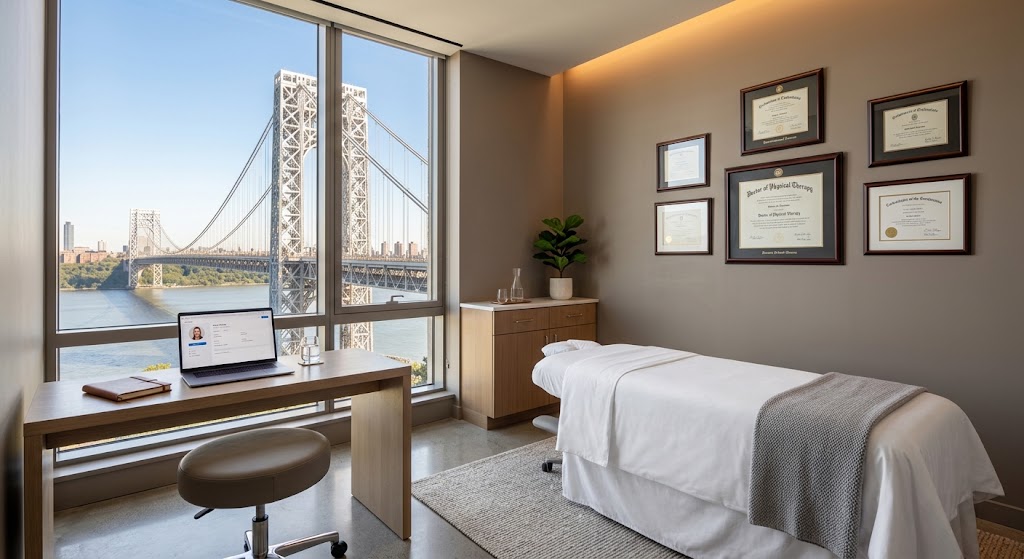
Medical office space near the George Washington Bridge attracts a specific kind of tenant: a provider practicing in New York who has run the numbers on Manhattan rent and concluded the math no longer works. The bridge makes the alternative viable in a way that no other crossing quite does, because upper Manhattan, Washington Heights, Inwood, and the west Bronx sit minutes from Bergen County on the far side.
The economics are stark. A Manhattan clinical suite commands multiples of what comparable space costs in northern New Jersey, and the difference compounds every month for the life of the lease. Providers early in independent practice feel it hardest, since the rent obligation arrives before the patient volume does.
Who Makes the Move
The pattern shows up across specialties:
- Physicians leaving hospital employment or a group practice to open something independent
- Nurse practitioners and physician assistants launching practices within their scope
- Dentists and dental specialists who need consultation and treatment planning space
- Mental health clinicians whose caseload already includes New Jersey residents
- Chiropractors, acupuncturists, and wellness practitioners serving a bridge-adjacent clientele
- Aesthetic providers whose patients drive to appointments anyway
A recurring theme: many already live in New Jersey and commute into New York. Moving the practice eliminates the commute rather than creating one.
What Patients Weigh
Patients evaluate an appointment on total time and total hassle, not on mileage. A Washington Heights patient who spends 25 minutes on the subway and 15 minutes walking has spent 40 minutes. Driving across the bridge to Bergen County and parking in a lot can beat that, particularly outside rush hour.
Where the calculation turns against you is the patient without a car. Retention among carless patients drops meaningfully, and honest planning accounts for it rather than assuming everyone follows.
Licensure Comes First
Nothing else in the plan matters if you can’t practice. New York licensure does not transfer to New Jersey, and the application timeline is the single longest item on most providers’ lists.
Where to Start
Physicians and podiatrists apply through the State Board of Medical Examiners, which also licenses and certifies several allied health professions. Nurses go through the Board of Nursing, dentists through the Board of Dentistry, and mental health clinicians through their respective boards, all under the Division of Consumer Affairs.
Processing time varies with application completeness and credential verification. Providers with training from multiple jurisdictions should expect longer. Start the application months before you intend to open, and check current requirements directly with your board rather than relying on secondhand summaries.
Everything Downstream of Licensure
New Jersey licensure gates a series of other items, and each carries its own wait:
- State licensure — the prerequisite for everything below
- Controlled Dangerous Substances registration if you prescribe
- DEA registration tied to your practice address
- Prescription Monitoring Program enrollment
- Malpractice coverage for New Jersey practice
- Insurance panel credentialing — three to six months is routine
Credentialing deserves particular attention. New Jersey plans are separate contracts from New York plans even when the carrier name is identical, and a practice address is required to begin. Sequencing the lease slightly ahead of credentialing is usually correct. Our guide on how to start your own practice walks through the full sequence.
What Crossing the Bridge Changes About Your Practice
Relocating is not a lift and shift. Several operational realities shift with the address.
Patient Mix
Expect the mix to change over 18 months. A portion of your New York patients follow, a portion drift, and New Jersey patients replace them. Providers who plan for continuity of the old panel are frequently disappointed. Providers who plan to rebuild locally while retaining a committed subset are usually pleased.
Bergen County demographics support the rebuild. The county is dense, affluent relative to state and national averages, and home to a large population of insured working professionals — a favorable base for both insurance-based and cash-pay practices.
Telehealth Across State Lines
Telehealth reduces attrition, with an important limitation: you generally must be licensed where the patient is located at the time of the visit. A New Jersey office does not authorize you to treat a New York patient remotely unless you hold New York licensure as well.
Many providers maintain both licenses for exactly this reason. Carrying dual licensure costs renewal fees and continuing education but preserves a patient base that would otherwise be lost, and it makes a phased transition possible rather than an abrupt one.
Referral Networks Reset
Your New York referral relationships do not travel. Rebuilding takes deliberate effort:
- Introduce yourself to primary care practices within a few miles
- Connect with hospital-affiliated physicians in the area
- Join county and state professional associations
- Establish a Google Business Profile at the new address early, since local search rankings take months to mature
- Meet the other providers in your building
A building occupied by independent practitioners generates internal referrals that a standalone office never produces. Our provider directory shows the kind of mix that supports it.
Choosing the Right Space on the New Jersey Side
Bridge proximity narrows the geography. Within that band, the specifics of the space decide whether the move works.
Size Against Practice Type
| Practice type | Typical need | Notes |
| Consultation-only | Single suite | Exam or treatment table plus seating |
| Solo procedural | Single to double | Depends on equipment footprint |
| Mental health | Single | Sound privacy matters more than area |
| Two-provider | Double | Or two singles on the same floor |
| Assessment or family work | Double | Table and seating for four |
Providers consistently overestimate what they need. A single suite at 180 to 240 square feet handles a full day of consultations without strain, and doubles at 325 to 470 cover procedural work and multi-person sessions. Our post on what to look for before renting a suite covers evaluation criteria in detail.
Furnished Versus Empty
An empty commercial unit means buildout, permits, furniture, and months before you see a patient. A furnished suite means a start date measured in days. For a provider carrying licensure delays and credentialing waits already, the difference is significant. Our explainer on turnkey suites covers what move-in ready should include.
Compliance in a Shared Building
The HIPAA Security Rule requires physical safeguards limiting access to facilities housing electronic protected health information, per the HHS Security Rule summary. In a multi-tenant building, ask:
- Who holds credentials to your suite, and is access logged?
- Is the network shared, and can you get a private connection?
- Does cleaning staff enter your suite, and when?
- Can you install your own locks on storage?
- Does a video intercom let you control patient entry?
Ask about regulated waste separately. General commercial landlords often have no arrangement, leaving you to contract independently.
Parking, Access, and Patient Retention
Two logistical details determine whether New York patients keep their appointments.
Parking Decides More Than Distance
A New York patient who drives to you has traded a subway ride for a parking search. Win that trade and retention holds; lose it and the patient quietly stops rebooking.
Evaluate honestly:
- Is there a municipal lot within a short walk?
- What does street parking look like at 10am on a weekday, not at the hour of your tour?
- Is the walk from parking to your door covered, short, and obvious?
- Where do patients with mobility limitations park?
Walk the block at the hours your patients would arrive. Do it twice, on different days.
Scheduling Around the Bridge
Bridge traffic follows predictable patterns, and a schedule built around them protects both you and your patients. Mid-morning and early-afternoon slots reliably outperform 8am and 5pm for cross-river patients. Say so directly when scheduling — patients appreciate the guidance and show up more consistently for it.
Building access hours matter for the same reason. A provider who wants to offer early or late appointments needs a building with secure individual credentials rather than one that locks at six.
Making the Transition Without a Revenue Gap
The hardest part of the move is the middle, where New York income has ended and the New Jersey practice hasn’t ramped.
A Phased Approach
Providers who manage the transition well tend to follow a similar path:
- Apply for New Jersey licensure while still practicing in New York
- Secure space once licensure is close, since credentialing needs an address
- Begin panel applications immediately on signing
- Open part-time in New Jersey while maintaining New York hours
- Shift the balance as the New Jersey schedule fills
- Close the New York practice once the numbers support it
Overlap costs money in double rent and double licensure. Overlap also prevents the gap that sinks practices. The cost of opening a medical office in New Jersey breaks down the figures involved.
Telling Patients
Give patients as much notice as your circumstances allow, and be concrete:
- The new address, with directions and a note about parking
- Approximate drive time from their neighborhood
- Whether telehealth remains available and under what conditions
- A named referral option for patients who can’t make the trip
Providing a referral for patients who won’t follow is both ethically sound and reputationally smart. Providers who handle the transition with care get referrals back from the colleagues they hand patients to.
Frequently Asked Questions
How long does it take to get a New Jersey medical license?
Timelines vary with credential verification and application completeness. Providers trained in multiple jurisdictions should expect longer than average. Check current processing information directly with the State Board of Medical Examiners and begin the application well before your intended opening date.
Can I treat New York patients by telehealth from a New Jersey office?
Generally you must hold licensure in the state where the patient is located at the time of the visit. A New Jersey office does not by itself permit remote treatment of New York patients. Many providers maintain both licenses to preserve continuity during a transition.
Will my New York patients follow me across the bridge?
A portion will, particularly patients who drive and patients in established treatment relationships. Attrition is real among patients without cars. Plan on rebuilding locally while retaining a committed subset, and treat anything better than that as upside.
Do I need to re-credential with insurance carriers?
Yes. New Jersey plan contracts are separate from New York contracts even under the same carrier name. Panel applications typically take three to six months and require a practice address, so start as soon as your lease is signed.
How far is Bergen County from upper Manhattan?
Towns immediately west of the George Washington Bridge sit within a short drive of Washington Heights, Inwood, and the west Bronx outside peak traffic hours. Actual times vary considerably with bridge conditions, which is why scheduling matters as much as distance.
What size suite do I need for a consultation practice?
A single suite of 180 to 240 square feet handles a full day of consultations comfortably, with room for an exam or treatment table, seating, storage, and a work surface. Procedural work and multi-person sessions generally call for a double.
Can I keep practicing in New York while opening in New Jersey?
Yes, provided you hold licensure in both states. A phased overlap is the most common approach and protects against a revenue gap during the ramp, at the cost of carrying both locations temporarily.
What should I ask a landlord about HIPAA compliance?
Ask who holds access credentials to your suite and whether access is logged, whether cleaning staff enter and when, whether the network is shared or private, whether you can add your own locks to storage, and how patient entry is controlled.
About SADA Med Suites
SADA Med Suites provides move-in ready private medical suites minutes from the George Washington Bridge, in downtown Englewood, New Jersey. Singles run 180 to 240 square feet, doubles 325 to 470, all furnished and connected with utilities, internet, and cleaning included. Providers relocating from New York can sign and begin seeing patients in days rather than waiting out a buildout.
Because credentialing requires a practice address, securing space early moves your entire timeline forward. Our provider directory shows the mix of independent practitioners already working in the building.
Start the move. View suites or arrange a visit. Call (201) 408-4793 — 50 E Palisade Ave, Fl 2, Englewood, NJ 07631.