
Key Takeaways
- Massage therapy room rental in Bergen County works in a single suite of 180 to 240 square feet, since table clearance rather than patient volume sets the minimum.
- New Jersey requires licensed therapists to carry professional liability coverage of at least $1,000,000 per occurrence and $3,000,000 aggregate — a license cannot be renewed without it.
- Therapists who employ other therapists must register the business with the Board. A solo practitioner renting a room for their own work is not an employer.
Massage Therapy Room Rental in Bergen County: What the Room Has to Do
Massage therapy room rental in Bergen County comes down to three things most listings never mention: whether you can walk around the table, whether the room holds heat, and where the linens go.
A massage table occupies roughly 6 feet by 2.5 feet. You work from every side of it, which means clearance matters more here than in nearly any other treatment practice. A room that fits the table on paper and nothing else is a room you’ll fight for the length of the lease.
Beyond that, the operational realities — linen volume, temperature, sound, and storage — decide whether the space supports a practice or just contains one.
Clearance and Minimum Size
- 3 feet on both long sides, so you can work the full length of the body without turning sideways
- 2 to 3 feet at head and foot, more if you do craniosacral or traction work
- Room for a stool, a side table for oils, and a chair for intake
- A corner or hook area for client clothing and belongings
- Door swing that doesn’t conflict with the table
A 10 by 12 room holds a table with workable access. Add storage and a small work surface and 180 to 240 square feet becomes comfortable.
| Setup | Working size |
| Solo therapist, one table | 180–240 sq ft |
| Table plus significant retail or storage | 240–325 sq ft |
| Two tables, or couples massage | 325–470 sq ft |
| Two therapists on the same days | Double suite or two singles |
Suites at SADA Med Suites run 180 to 240 square feet as singles and 325 to 470 as doubles, which covers every row above. Our post on how many treatment rooms you need works the arithmetic backward from revenue and session length if you’re deciding between one table and two.
Bring a Tape Measure
Floor plans mislead. Measure the room, mark the table footprint, and walk the clearance as if you were working. Then measure the doorway and elevator — a hydraulic or electric table is heavy and bulky, and discovering it won’t fit through a door on delivery day is an expensive afternoon.
Our checklist of ten things to verify before renting a medical office suite covers the full tour sequence.
Temperature, Sound, and Light
Three environmental factors that separate a workable room from a bad one.
Heat Is Not Optional
A client lies undressed under a drape for an hour, barely moving. A room set for people in business attire feels cold to them within ten minutes, and a cold client cannot relax.
Per-suite climate control is worth more for massage than for almost any other practice type. A building-wide thermostat means fighting the system all winter with space heaters and table warmers. Confirm during the tour whether you control the temperature in your room independently.
Sound Carries Both Ways
Corridor conversation, footsteps, doors, and plumbing all intrude on a room where someone is trying to switch off. The reverse matters too — your music and your client’s conversation should not reach the hallway.
Test it. Have someone speak at conversational volume outside with the door closed, then listen from where the table will sit. Solid-core doors with seals and a sweep address more transmission than any wall treatment, and a white noise machine outside the door handles the rest.
Lighting
Overhead fluorescent is wrong for a room where people close their eyes. Look for controllable task lighting, dimmers where possible, and natural light you can shade.
Linens, Laundry, and Storage
The operational problem new practices underestimate most.
The Volume Question
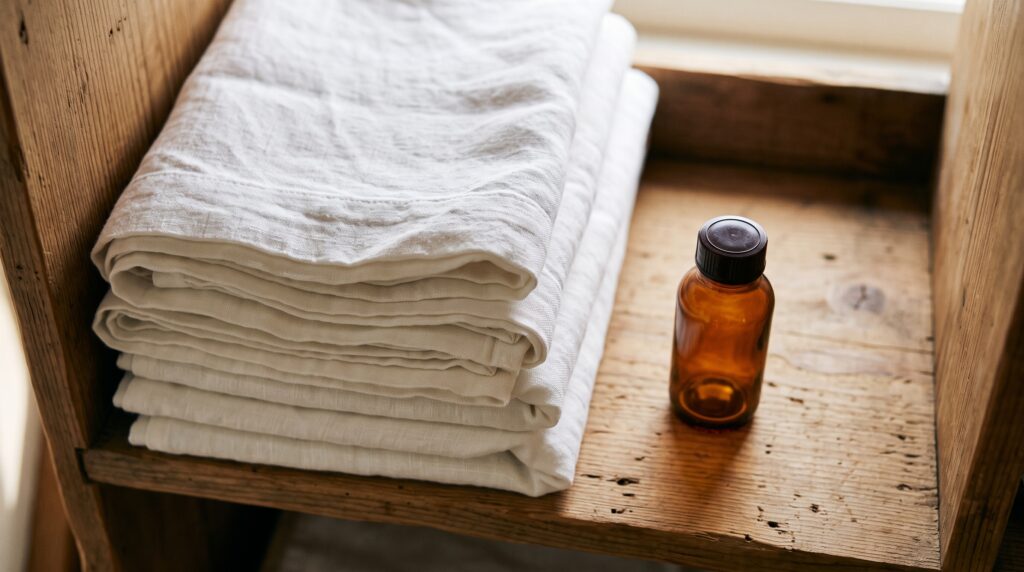
Every session consumes a set of linens — sheet, cover, face cradle cover, bolster cover, towels. A therapist seeing six clients a day burns through roughly six full sets, and they all have to go somewhere clean and come back somewhere clean.
Options, with their tradeoffs:
- Commercial linen service — predictable, no laundry time, a recurring cost and a delivery arrangement to confirm with the landlord
- Laundry at home — cheapest, and it adds unpaid hours plus transport to every working day
- On-site laundry — rarely available in a professional building, worth asking but don’t plan around it
- Disposable face cradle covers — reduces volume meaningfully at modest cost
Decide before you sign, because the answer determines how much storage you need.
Storage Requirements
- Clean linen storage, closed and separate from everything else
- Soiled linen container, closed, with capacity for a full day
- Oils, lotions, and creams, stored away from heat
- Bolsters, wedges, and supports
- Equipment — hot stone units, hydrocollators, cupping sets
Lockable storage matters for security and for product. Confirm you may install your own locks on cabinets and closets, and get it in the lease rather than accepting a verbal yes.
Surfaces and Ventilation
Oils get on everything. Confirm the landlord’s position on wall and floor finishes, and plan for surfaces you can wipe down.
Ventilation matters if you use strongly scented products or work with clients who react to them. Shared HVAC carries scent to neighboring suites, and a conversation before signing beats a complaint afterward.
The Sink Question
An in-suite sink changes the working day substantially — hand washing between clients, rinsing cloths, cleaning equipment. Without one, every one of those tasks means leaving the room and walking a corridor.
Our guide to turnkey suites covers what a furnished suite should include.
Licensing in New Jersey
Massage and bodywork therapists license through the New Jersey Board of Massage and Bodywork Therapy, under the Division of Consumer Affairs.
What Licensure Requires
Per the Board’s application information and qualifications page:
- Completion of a course of study of at least 500 hours from an accredited school
- Passing either the NCBTMB examination or the Massage and Bodywork Licensing Examination (MBLEx) administered by the FSMTB
- A Supervision Certification covering 100 hours of clinical practice supervised by a licensed massage and bodywork therapist
- Training in CPR, first aid, and automated external defibrillator use
- A criminal background check
Therapists licensed in another state may apply by endorsement where the educational and examination requirements are substantially similar, with official verification sent directly from the issuing state.
Licensing fees run $120 if you qualify during the first year of the biennial renewal period and $60 during the second year.
The Insurance Requirement
New Jersey sets a specific and substantial professional liability requirement. Under N.J.S.A. 45:11-60 and N.J.A.C. 13:37A-2.3(a)(3), a massage and bodywork therapy license cannot be renewed without professional liability insurance, and the Board requires proof of coverage of at least $1,000,000 per occurrence and $3,000,000 aggregate per policy year.
Bind coverage before you sign a lease, since most leases specify minimum amounts of their own and you’ll need the certificate either way. A landlord’s policy covers the building, never your practice.
Business Registration for Employers
The Board’s frequently asked questions address this directly: therapists who employ other massage and bodywork therapists must register the business with the Board, and the application is made online.
The distinction matters for how you structure a rented room:
- Renting a room for your own practice — you are a solo practitioner, not an employer
- Hiring therapists to work in your room — you are operating an establishment and must register
- Two therapists on separate leases — two independent practices, not an employment relationship
Confirm your structure with the Board before building a business around an assumption. Our post on which professionals can rent a medical suite covers how requirements differ across the professions renting small clinical space.
Municipal Requirements
Several New Jersey municipalities impose their own permits or registration on massage establishments, separate from state licensure. Check with the town where you plan to practice, and confirm the building’s certificate of occupancy permits your use.
Where the Room Fits in the Launch
Order of operations, with the massage-specific items noted.
- Confirm licensure is active and in good standing
- Bind professional liability coverage at the required limits
- Form the business entity and obtain an EIN
- Check municipal requirements for the town you’re considering
- Sign the lease — confirm certificate of occupancy and permitted use
- Arrange linen service or a laundry workflow
- Register the business with the Board if you will employ therapists
- Set up booking, payment, and intake documentation
Our step-by-step guide to starting a practice covers the dependency chain, and our cost breakdown for opening in New Jersey covers what setup runs.
Client Records
Intake forms, health histories, and session notes are protected information, and they need secure storage with access limited to you. Ask the landlord who holds credentials to your suite, whether entry is logged, whether cleaning staff enter and when, and whether the network is shared.
Our HIPAA-compliant office setup checklist covers the physical safeguards worth putting in place from the first day.
Starting Part-Time
Many therapists open a private practice while still working at a spa, chiropractic office, or wellness center.
Why It Works for Massage
Session-based work fits evenings and weekends well, and demand outside standard business hours is strong. A therapist running three evenings and a Saturday can build a meaningful private caseload without leaving a steady position.
Confirm two things before committing:
- Your current employment agreement — non-compete and non-solicitation terms may limit where you practice and which clients you can see
- Building access hours, in writing, since a building that locks at six eliminates your best slots
Secure 24/7 access with individual credentials removes the second problem entirely. Our post on part-time medical office space covers how practitioners structure the overlap.
Sharing a Room
Two therapists on opposite schedules can split a suite, which cuts the cost of the early phase considerably. Document the schedule, storage division, linen responsibility, cleaning standards, and exit terms in writing, and confirm the lease permits the arrangement.
Where in Bergen County
Massage draws clients locally and repeatedly, which shapes what matters in a location.
What Supports the Practice
- Parking that works, because clients return weekly or monthly and friction compounds
- Household income supporting regular sessions, since most massage is paid directly
- Residential density within a short drive
- Visibility, since massage is discovered through local search and walk-by more than referral
- Neighboring providers — chiropractors, acupuncturists, and physical therapists generate referrals
A building with other independent practitioners produces cross-referral a standalone storefront never sees. Our provider directory shows the kind of mix that works.
Corridor Options
Our town-by-town guide to Bergen County covers the county in full. For massage specifically, parking and household income matter more than hospital proximity — downtown Englewood offers municipal parking and a walkable business district, with the specifics in our post on medical office space for rent in Englewood.
Getting Found
Create a Google Business Profile the week you sign your lease, since local rankings take months to mature. Google requires businesses displaying an address to operate from it and maintain permanent signage with the business name — confirm your suite door nameplate and building directory listing before verifying. Our guide to setting up a Google Business Profile at a shared address covers the process in a multi-tenant building.
Online booking matters more for massage than for most practices. A large share of clients book outside business hours and prefer not to call.
Frequently Asked Questions
How much space does a massage therapy room need?
A single suite of 180 to 240 square feet holds a table with full working clearance, storage, and a small work surface. Plan for roughly 3 feet on both long sides of the table and 2 to 3 feet at head and foot.
Does New Jersey set a minimum room size for massage therapy?
The Board sets no floor area requirement. Your obligations concern licensure, professional liability coverage, scope of practice, and recordkeeping. Municipal permits may impose their own conditions, so check the town.
What insurance does New Jersey require for massage therapists?
Professional liability coverage of at least $1,000,000 per occurrence and $3,000,000 aggregate per policy year. A license cannot be renewed without proof of coverage, under N.J.S.A. 45:11-60 and N.J.A.C. 13:37A-2.3(a)(3).
Do I need to register my business with the Board?
Only if you employ other massage and bodywork therapists. A solo practitioner renting a room for their own work is not an employer. Two therapists on separate leases are two independent practices.
What does New Jersey licensure require?
At least 500 hours of accredited education, passing the NCBTMB examination or the MBLEx, a Supervision Certification covering 100 supervised clinical hours, CPR, first aid, and AED training, and a background check.
How do I handle linens in a rented room?
Most practices use a commercial linen service, which removes laundry time at a recurring cost. Home laundry is cheaper and adds unpaid hours. Either way, you need closed storage for clean linens and a closed container for soiled ones with capacity for a full day.
Is temperature control important?
More than in almost any other practice. Clients lie undressed under a drape for an hour, and a building-wide thermostat set for people in business attire will feel cold to them. Confirm per-suite climate control during the tour.
Can I start part-time while working somewhere else?
Yes, and many therapists do. Check your employment agreement for non-compete and non-solicitation terms first, and confirm building access hours in writing so evening and weekend sessions are possible.
About SADA Med Suites
SADA Med Suites rents private, fully furnished suites to independently licensed practitioners at 50 E Palisade Avenue in downtown Englewood, New Jersey. Singles run 180 to 240 square feet and doubles run 325 to 470, with utilities, high-speed internet, cleaning, shared waiting area, in-suite sink, private climate control, video intercom entry, secure 24/7 access, and custom door signage included in one monthly payment.
Per-suite climate control and sound-tested rooms matter more for massage than for most practice types. Measured square footage comes in writing, so you can confirm table clearance before signing rather than after a table arrives. Municipal parking sits nearby, which counts for clients who come back every month.
Measure the clearance yourself. Browse available suites or book a tour. Call (551) 230-7668 — 50 E Palisade Ave, Fl 2, Englewood, NJ 07631.