Key Takeaways
- A permanent makeup studio rental in New Jersey is governed by the Body Art Procedures rules, N.J.A.C. 8:27 — not by the Board of Cosmetology.
- The license attaches to the facility, not to you. A License to Operate a Body Art Establishment comes from the local health department, with plan review before construction or operation and an inspection before opening.
- Some New Jersey towns do not permit body art establishments at all. Check zoning and the local health department before signing anything.
Permanent Makeup Studio Rental in New Jersey: Know Which Rules Apply
Artists searching for a permanent makeup studio rental in New Jersey often assume they fall under the Board of Cosmetology, the way estheticians do. They don’t.
New Jersey defines permanent cosmetics, micropigmentation, and dermal pigmentation under N.J.A.C. 8:27-1.3, within the State Sanitary Code chapter governing body art procedures. Microblading is included. So is eyeliner, lip blush, scalp micropigmentation, and areola restoration.
The practical effect: your facility needs a License to Operate a Body Art Establishment, issued by the local health department in the municipality where you practice. The New Jersey Department of Health’s microblading and permanent cosmetics guidance states it plainly.
Getting this wrong is not a paperwork problem. It determines whether you can legally open at the address you’re considering.
What the Rules Prohibit
Two provisions matter before you tour a single space, both drawn from the body art procedure rules:
N.J.A.C. 8:27-2.1 — anyone intending to construct, expand, alter, or operate a permanent cosmetic establishment must apply in writing to the local health authority for review and approval. Plan review comes before work begins, not after.
N.J.A.C. 8:27-2.6 — no person may practice body art in a non-licensed facility, and no person may display a sign, advertise, or hold themselves out as a body art practitioner without first obtaining a license or permit for the facility from the health authority.
Signage and advertising are covered explicitly. A nameplate on a suite door before the facility is licensed is itself a violation.
You Cannot Operate Inside a Cosmetology Shop
A point that catches artists who trained alongside estheticians. The Board of Cosmetology and Hairstyling prohibits body art procedures in cosmetology shops, and the Department of Health has acknowledged that position.
Permanent cosmetics and licensed skin care cannot share one licensed premises. An artist planning to work out of a friend’s salon or a licensed skin care shop is planning something neither regulator permits.
Our guide to aesthetic suite rental in Bergen County covers the esthetics side, which runs under an entirely different licensing scheme with its own 350 square foot premises minimum.
Not Every Town Allows It
The question to answer before you fall for a space.
The Department of Health’s guidance states directly that certain towns will not allow a body art establishment to operate, and advises checking with local zoning and health departments.
Zoning ordinances in some New Jersey municipalities restrict or exclude body art establishments entirely, regardless of what the state rules permit. Others allow them only in specific districts.
The Order of Calls
- Municipal zoning office — are body art establishments permitted at this address?
- Local health department — what does the establishment licensing process involve here, and what are the fees?
- The landlord — will they permit a body art establishment, and will they cooperate with plan review?
Make all three calls before signing. A lease at an address where the use is prohibited is a lease you pay for and cannot use.
The Landlord Conversation
Plan review means the health authority examines the physical facility — surfaces, sinks, sterilization area, workflow separation, waste handling. Any modification the review requires has to be permitted by the landlord, and often paid for by someone.
Ask directly:
- Will you permit a body art establishment at this address?
- Will you support the plan review with documentation and access for inspection?
- What modifications would you allow, and who pays?
- Does the certificate of occupancy support this use?
A landlord unfamiliar with the requirement is not necessarily a problem. A landlord unwilling to put an answer in writing is.
What the Facility Has to Support
Subchapter 8 of N.J.A.C. 8:27 covers permanent cosmetics specifically. The requirements are oriented toward infection control, and they shape the room.
Core Requirements
- A dedicated procedure area, separated from waiting, retail, and general-purpose space
- Non-porous, cleanable surfaces throughout the procedure area — floors, walls, counters, and furnishings
- Hand washing facilities readily accessible to the procedure area
- A separate area for cleaning and sterilizing instruments, distinct from the procedure area
- Single-use needles and supplies, with approved sharps disposal
- Closed containers for clean and soiled items, kept separate
- Approved pigments, documented
- Client records retained per the rules, including procedures performed and the practitioner
Confirm the specifics with your local health authority, since enforcement details vary by jurisdiction and the rules have been amended. The Department’s notice of adoption for the 8:27 amendments covers the current framework and the Department’s reasoning on several contested points.
Why a Standard Office Suite Needs Work
A furnished professional suite typically has carpet or a porous floor finish, painted drywall, standard office furniture, and a single sink. None of that satisfies a procedure area requirement without modification.
What usually needs addressing:
| Requirement | Typical gap |
| Non-porous flooring | Carpet or standard finish |
| Cleanable wall surfaces | Painted drywall at the procedure station |
| Separate sterilization area | No designated space |
| Workflow separation | One undivided room |
| Sharps and regulated waste | No building arrangement |
Some of it is solvable with furnishings and layout. Some requires the landlord’s permission to modify. Settle which is which before signing, not during plan review.
Practitioner Qualifications
Separate from the facility license, and equally required.
Training
N.J.A.C. 8:27-8.1 covers the qualifications of permanent cosmetics practitioners and apprentices. Municipal ordinances adopting the state code frequently reference a 40-hour training program approved by the Society of Permanent Cosmetic Professionals or the International Micropigmentation Association, and the Department’s guidance also references the American Academy of Micropigmentation.
Confirm which programs your local health authority accepts. Approval is administered locally, and a credential accepted in one town may need supporting documentation in another.
Insurance
Municipal ordinances commonly require proof of professional malpractice liability insurance for each practitioner as part of both the initial and the renewal establishment license.
Bind coverage before you apply. You will need the certificate, and your lease will likely specify minimums of its own.
Bloodborne Pathogens
The rules require the operator of a body art establishment to address bloodborne pathogens standards, including offering appropriate protection to practitioners. Build the training and documentation into your setup rather than treating it as an afterthought.
Sizing the Studio
Once the regulatory picture is settled, the space question is comparatively simple.
What the Work Needs
Permanent cosmetics is detailed, close-range work on a reclined client, usually running 90 minutes to three hours per appointment.
- A reclining chair or table with access from the head and both sides
- Strong, adjustable task lighting — colour-accurate, positioned over the work area
- Magnification mounted or on a stand
- A rolling stool with room to move around the head
- A work surface for pigments, needles, and disposables within reach
- Storage, closed and cleanable
- A seating area for consultation and mapping before the procedure
| Setup | Working size |
| Solo artist, one station | 180–240 sq ft |
| Station plus consultation and retail area | 240–325 sq ft |
| Two stations or a second artist | 325–470 sq ft |
Suites at SADA Med Suites run 180 to 240 square feet as singles and 325 to 470 as doubles. Our post on how many treatment rooms you need covers the arithmetic if you’re weighing one station against two.
Appointment Length Changes the Math
A three-hour appointment means two or three clients a day, not six. Capacity is constrained by session length rather than by room count, which means a second station rarely pays for itself until you add a second artist.
Size for one station and negotiate the option to expand rather than pre-paying for capacity you won’t use.
Lighting Deserves Its Own Line
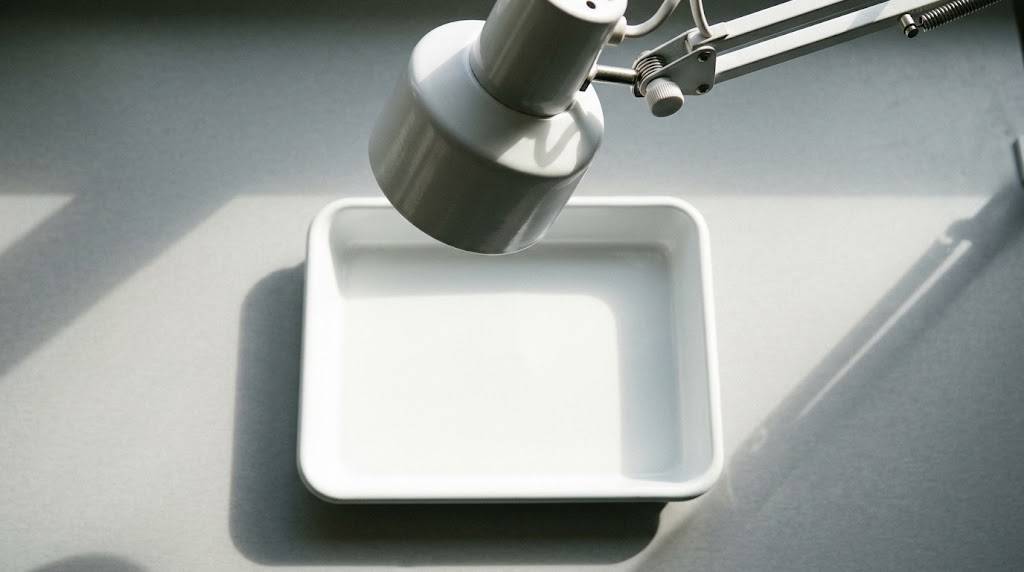
Pigment colour selection under bad light produces results clients return unhappy about. Overhead fluorescent shifts colour perception noticeably.
Look for natural light you can control, and plan for colour-accurate task lighting regardless. Test it during the tour by looking at your own hand under the room’s existing fixtures.
Setup Sequence
Order matters more here than in most professions, because the facility license gates the opening.
- Confirm zoning permits a body art establishment at the address
- Contact the local health department about the process, fees, and what plan review requires
- Complete practitioner training accepted by the local authority
- Bind professional liability coverage
- Confirm the landlord will permit the use and support plan review
- Sign the lease, with permitted use language covering body art specifically
- Submit plans to the local health authority for review and approval
- Complete any required modifications
- Pass inspection and receive the License to Operate a Body Art Establishment
- Install signage — only after the license is issued
Step ten is not optional sequencing. Advertising or displaying a sign before the facility is licensed is prohibited under 8:27-2.6.
Our step-by-step guide to starting a practice covers the business formation steps that run alongside, and our cost breakdown for opening in New Jersey covers what setup runs.
Renewal
Establishment licenses are typically annual, with many municipalities expiring all licenses on December 31 regardless of issue date. Inspection precedes renewal. Build the cycle into your calendar.
What to Verify Before Signing a Lease
A short list, in order of how much trouble each causes when missed.
- Zoning permits body art establishments at this specific address
- Certificate of occupancy supports the use
- Landlord agreement in writing to permit the use and support plan review
- Permitted use language in the lease naming body art or permanent cosmetics specifically
- Modification rights for flooring, surfaces, and any separation the health authority requires
- Sharps and regulated waste handling arrangement
- Signage rights, since you’ll need them after licensure
- Measured square footage in writing
Our checklist of ten things to verify before renting a medical office suite covers the general evaluation, and our guide to turnkey suites covers what should be included in a furnished space.
Where in Bergen County
Location matters less for permanent cosmetics than for most practices, because clients travel for an artist rather than choosing by proximity. Two things still count.
Zoning Varies Town to Town
Since some municipalities exclude body art establishments entirely, the geography of where you can practice is narrower than the geography of where space exists. Confirm per town rather than per county.
Our town-by-town guide to Bergen County covers the markets, though zoning for this specific use has to be verified directly with each municipality.
Parking and Appointment Length
Clients arriving for a three-hour appointment need somewhere to leave a car for three hours. Metered street parking with a two-hour limit is a real problem, and it is exactly the kind of detail that produces a bad first review.
Check parking duration limits, not just availability. Municipal lots with longer limits are worth more here than proximity.
Getting Found
Permanent cosmetics is discovered through Instagram, Google, and word of mouth more than through referral. Create a Google Business Profile once your facility is licensed and signage is installed — Google requires businesses displaying an address to operate from it with permanent signage bearing the business name. Our guide to setting up a Google Business Profile at a shared address covers verification in a multi-tenant building.
A building with other independent providers also generates referrals — our provider directory shows the kind of mix that works.
Frequently Asked Questions
Who regulates permanent makeup in New Jersey?
The Department of Health, through the Body Art Procedures rules at N.J.A.C. 8:27, administered and enforced by local health departments. Permanent cosmetics, micropigmentation, dermal pigmentation, and microblading all fall within those rules — not under the Board of Cosmetology.
Do I need a license for the studio itself?
Yes. A License to Operate a Body Art Establishment is issued by the local health department in the municipality where you practice. The license attaches to the facility, with plan review before construction or operation and an inspection before opening.
Can I do permanent makeup in a salon or skin care shop?
No. The Board of Cosmetology prohibits body art procedures in cosmetology shops, and the Department of Health has acknowledged that position. Permanent cosmetics requires a separately licensed body art establishment.
Can I practice permanent makeup anywhere in New Jersey?
No. Certain municipalities do not permit body art establishments to operate. The Department of Health advises checking local zoning and health departments before proceeding.
What training does New Jersey require?
N.J.A.C. 8:27-8.1 covers practitioner qualifications, and municipal ordinances commonly reference a 40-hour program approved by the Society of Permanent Cosmetic Professionals or the International Micropigmentation Association. Confirm which credentials your local health authority accepts.
Can I advertise before my facility is licensed?
No. Under N.J.A.C. 8:27-2.6, no person may display a sign, advertise, or hold themselves out as a body art practitioner without first obtaining a license or permit for the facility from the health authority.
How much space does a permanent makeup studio need?
A single suite of 180 to 240 square feet holds one station with consultation seating and storage. Studios adding retail or a second artist generally need 240 to 470 square feet. Facility requirements around surfaces and separation matter more than raw area.
What does a standard office suite need to become compliant?
Typically non-porous flooring and cleanable surfaces in the procedure area, a designated sterilization space separate from the procedure station, accessible hand washing, and sharps and regulated waste arrangements. Confirm specifics with your local health authority during plan review.
About SADA Med Suites
SADA Med Suites rents private, fully furnished suites to independently licensed practitioners at 50 E Palisade Avenue in downtown Englewood, New Jersey. Singles run 180 to 240 square feet and doubles run 325 to 470, with utilities, high-speed internet, cleaning, shared waiting area, in-suite sink, private climate control, video intercom entry, secure 24/7 access, and custom door signage included in one monthly payment.
Permanent cosmetics carries facility requirements that go beyond a lease, and we’d rather have that conversation before a tour than after. Bring your questions about zoning, plan review, and what modifications would be needed — a clear answer early saves everyone an application that cannot be approved.
Start with the right questions. Browse available suites or get in touch. Call (551) 230-7668 — 50 E Palisade Ave, Fl 2, Englewood, NJ 07631.